
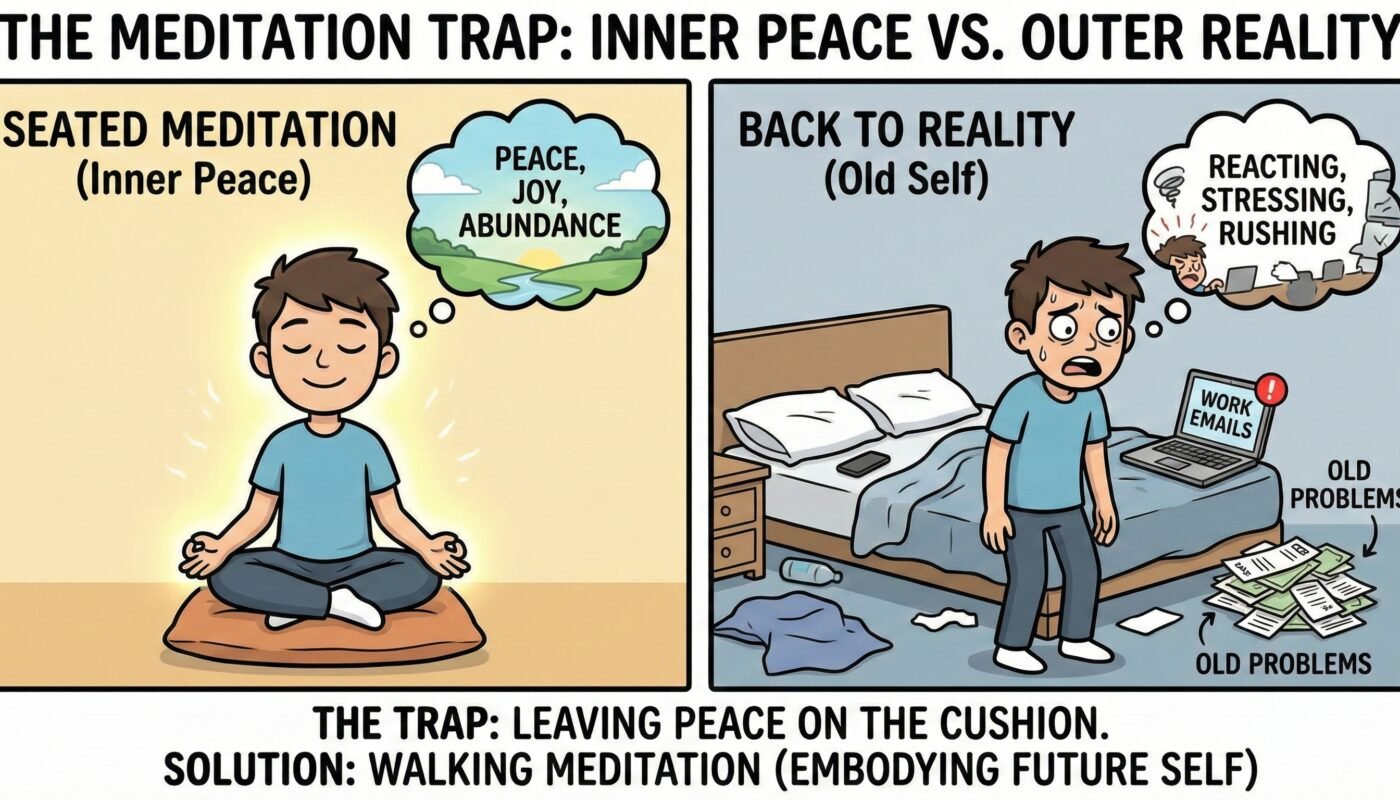
Many of us have experienced the power of a great meditation. You sit in a quiet room, close your eyes, and connect to a feeling of peace, joy, or abundance. For 30 minutes, you feel like a new person.
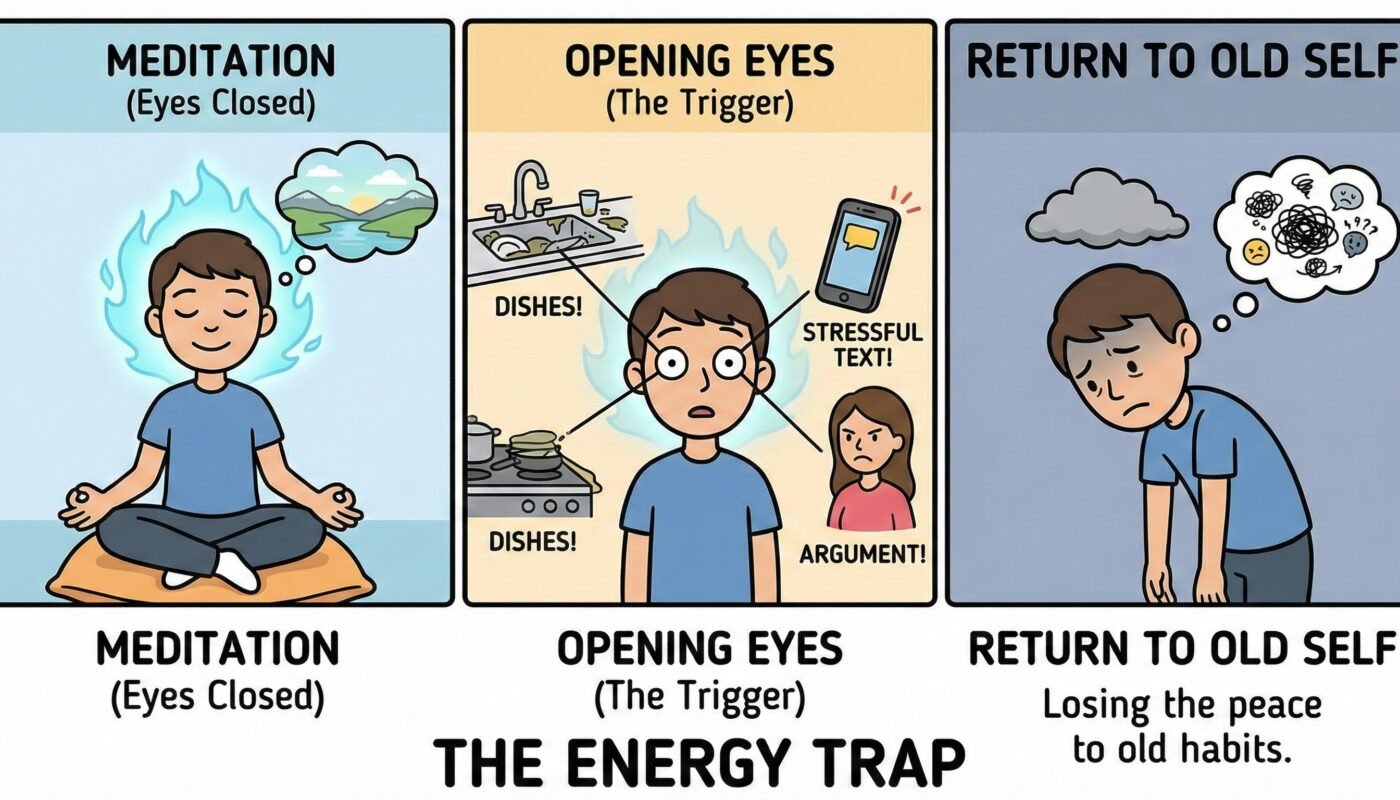
But then you open your eyes.
You see your unmade bed, your work emails, and the same old problems. Before you know it, that feeling of peace evaporates, and you are back to your old self—reacting, stressing, and rushing.
This is the biggest trap in personal transformation: We leave our energy on the meditation cushion.
In Chapter 9 of his transformative book, the author introduces a technique designed to solve this problem: The Walking Meditation.
This practice bridges the gap between the inner world of meditation and the outer world of action. It teaches you how to walk, stand, and move as your future self, so you don’t just visit your new life in your mind—you actually step into it.
In this article, we will explore why seated meditation isn’t enough, the science of “embodying” your future, and a step-by-step guide to practicing the Walking Meditation.
The Problem: Leaving Your Energy Behind
When you meditate sitting down, you are changing your internal state. You are lowering your brain waves (from Beta to Alpha or Theta) and raising your energy.
However, the moment you open your eyes, your brain latches onto the environment.
- You see your kitchen → you remember you need to do dishes.
- You see your phone → you remember a stressful text.
- You see your partner → you remember an argument.
Your environment triggers your old memories, which trigger your old emotions. You return to the unconscious programs that run your life. You disconnect from the energy of your future and return to the energy of your past.
To truly change, you must be able to maintain your elevated energy with your eyes open. You must learn to carry that new frequency into your day, into your job, and into your relationships.
The Science of “Embodying” the Future
The Walking Meditation is about embodiment.
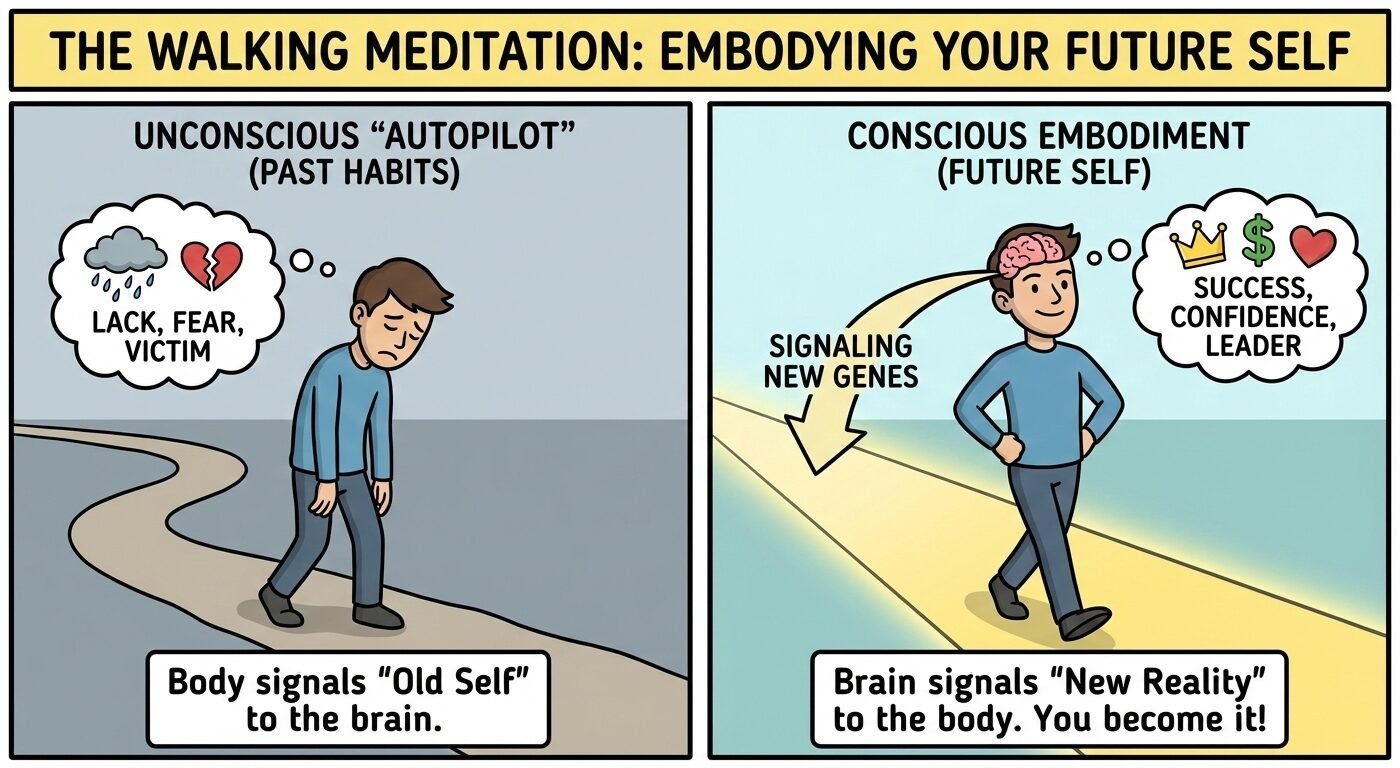
Most of our day is spent moving unconsciously. We walk, drive, and work on autopilot. Our body is running the show based on past habits.
- A depressed person walks differently than a joyful person.
- A wealthy person stands differently than a person in lack.
- A confident leader moves differently than a fearful victim.
Your posture, your stride, and your facial expressions are biological signals. They tell your brain how to feel.
When you practice the Walking Meditation, you are reversing this process. By consciously changing how you walk and stand to match your future self, you are signaling new genes. You are training your body to become the mind of that future person.
You stop waiting for success to arrive so you can feel successful. You practice walking as a successful person now, which draws that reality to you.
How to Practice the Walking Meditation
This meditation is best done in a quiet space in nature where you won’t be disturbed.
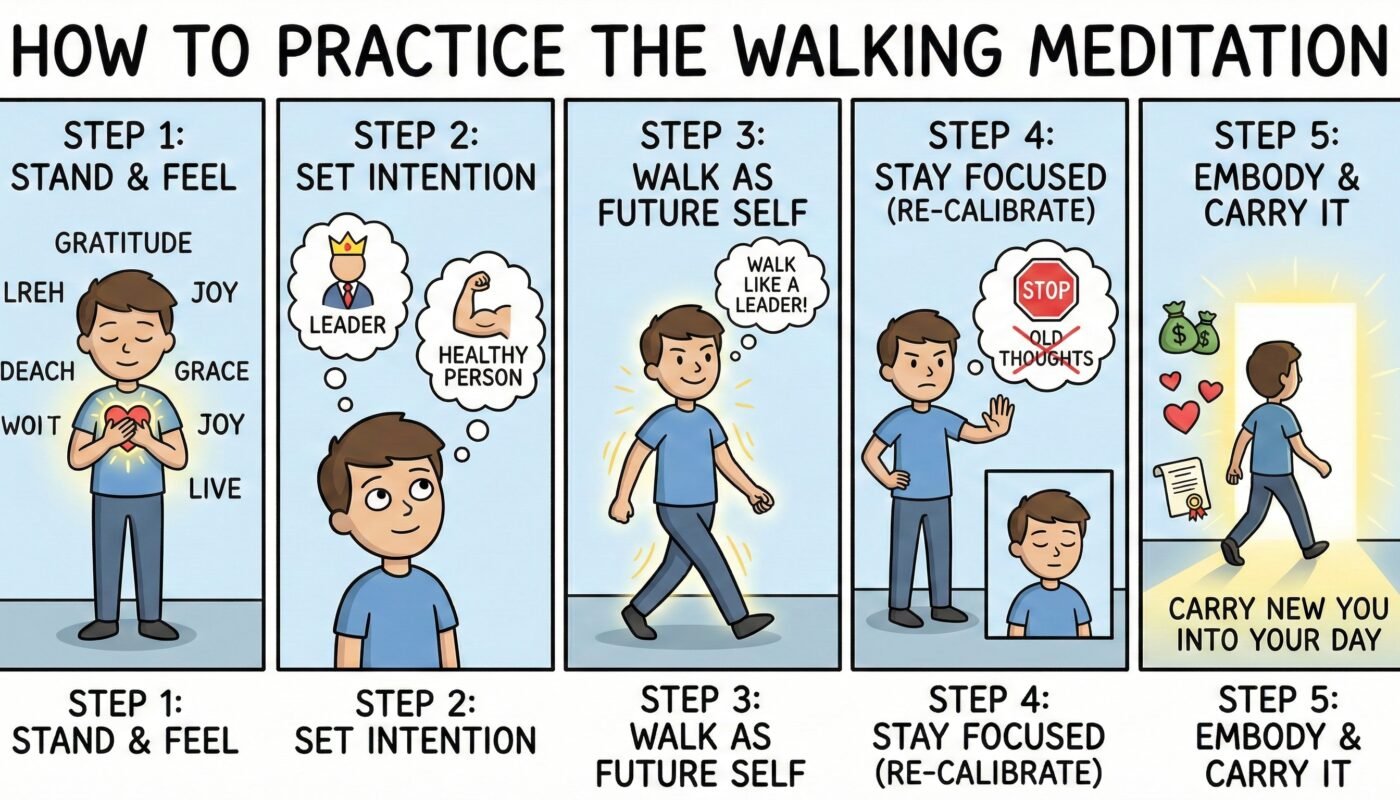
Step 1: The Standing Start
Begin by standing still. Close your eyes. Place your attention on your heart center.
Start to generate the elevated emotions of your future—gratitude, joy, freedom, or power. Don’t just think about them; feel them in your chest. Let this energy expand beyond your body.
Step 2: The Intention
While standing with eyes closed, clarify your intention. Who is the person you want to become?
- A noble leader?
- A wealthy entrepreneur?
- A healed, healthy person?
- A mystic?
Ask yourself: How would this person stand? How would they breathe? What is their energy?
Step 3: The Walk
Open your eyes. Keep your focus soft (don’t stare at specific objects). Maintain that elevated energy.
Begin to walk.
Do not walk as your old self. Walk as your future self.
- Adopt the posture of your future.
- Match your stride to your new energy.
- Smile as if your prayers have already been answered.
Step 4: The Trance
As you walk, try to stay in a trance state. Do not let your mind wander to your to-do list. If you catch yourself reverting to your old walk or old thoughts, stop.
Stand still. Re-calibrate your energy. Close your eyes if you need to. Then, start again.
Step 5: The Embodiment
Continue for about 10-20 minutes. Feel the reality of your future. Imagine you are walking into your new life. Feel the synchronicities, the wealth, and the health washing over you.
The goal is to memorize this feeling so deeply that when you finish the meditation, you don’t go back to being the “old you.” You carry this new person into your day.
Conclusion: Walking Into a New Destiny
The Walking Meditation is the practice of living your truth.
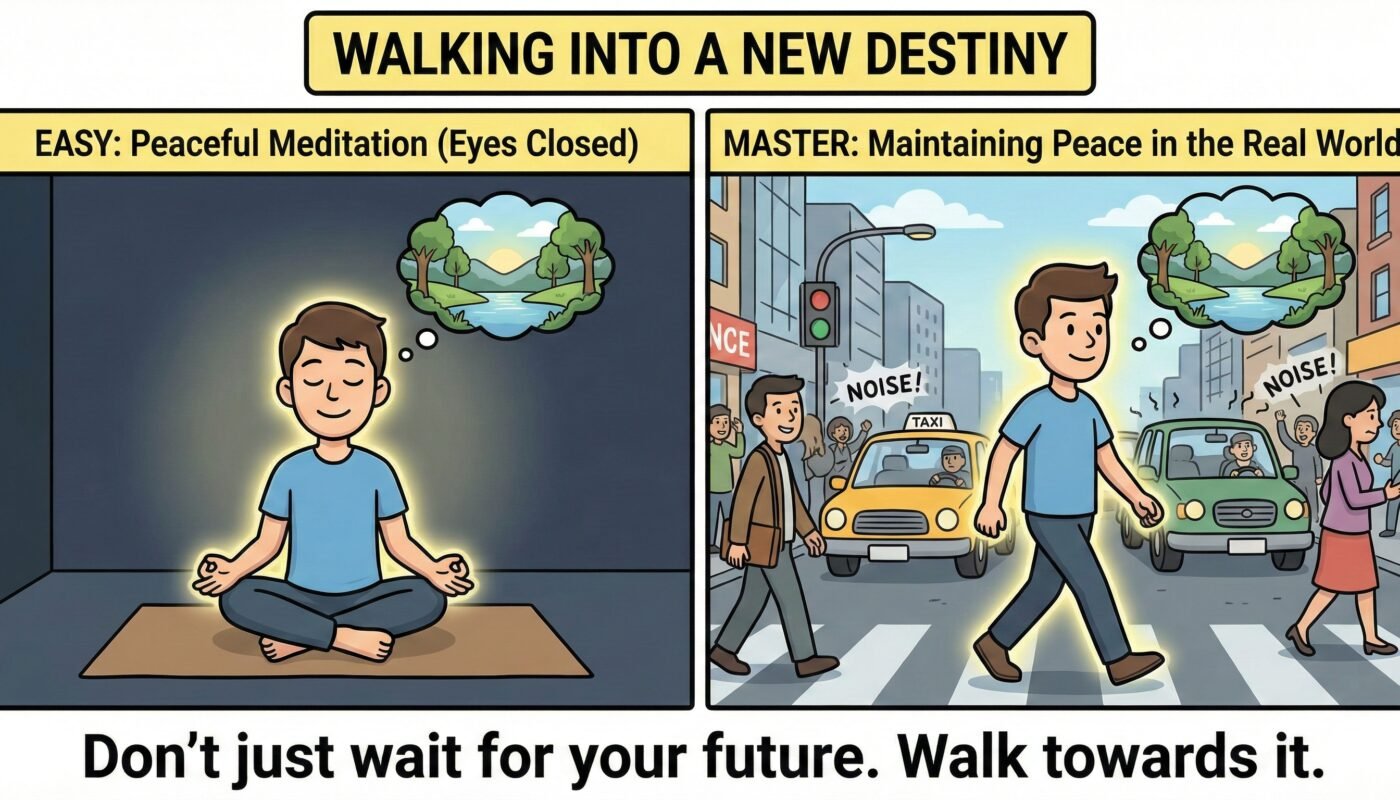
It is easy to be peaceful with your eyes closed in a dark room. The real master is the one who can walk through traffic, handle a crisis, or navigate a busy workday while maintaining the energy of their future.
By practicing this technique, you are telling the universe that you are ready. You aren’t just dreaming of a new life; you are actively stepping into it. You are shortening the distance between you and your destiny with every step.
Don’t just wait for your future to find you. Walk towards it.
Credit / References
Book Name: Becoming Supernatural: How Common People Are Doing the Uncommon
Author Name: Dr. Joe Dispenza
Note: The concepts regarding the Walking Meditation, the limitations of seated meditation for daily integration, and the process of embodying the future self with eyes open are derived from Chapter 9 of Dr. Joe Dispenza’s book.
Copyright Disclaimer
This article is written for educational and informational purposes only.
No copyright infringement is intended.
All original ideas and concepts belong to their respective author(s).
For any concerns or queries, please contact: contact@mohitsidana.com
FAQs
1. Can I do this on a treadmill?
While you can, it is much better to do it in an open space, ideally in nature. Walking in nature allows your focus to remain open and expansive, whereas a treadmill often requires focused attention on balance and machinery, which can pull you out of the trance state.
2. Do I have to close my eyes while walking?
No! The goal is to do this with eyes open. You start with eyes closed to generate the feeling, but the practice itself is about maintaining that feeling while interacting with the visual world.
3. What if people see me?
This is a common fear, but it’s actually a great opportunity to overcome your self-consciousness (a trait of the “old self”). If you are worried about looking strange, find a secluded spot. However, learning to hold your elevated state regardless of what others think is a powerful part of the training.
4. How often should I do this?
You can do it as a dedicated meditation practice (20-30 minutes) a few times a week. However, you can also practice “micro” versions of it throughout your day—walking to your car, walking into a meeting, or walking to the grocery store as your future self.
5. Why is “posture” so important?
Your posture sends feedback to your brain. If you slump, your brain produces chemicals related to insecurity or sadness. If you stand tall and open, your brain produces chemicals related to confidence and power. Changing your body language is a shortcut to changing your mind.
Post a comment
Related Posts
Case Studies of the Supernatural: 4 Impossible Stories of Healing and Manifestation – Chapter 14
We are told that some things are impossible. If you are diagnosed with a “terminal”…
Project Coherence: How Group Meditation Can Heal the World – Lesson 13
We often feel helpless when we look at the world. We see war, poverty, crime,…
The Awakening of the Pineal Gland: How to Upgrade Your Brain and Experience Higher Dimensions – Lesson 12
Most of us think of our senses as the only way to experience reality. We…
Beyond the Physical Body: How to Unlock the Infinite Realm of “Space-Time” – Chapter 11
We spend our entire lives perceiving the world through three dimensions. We see objects (height,…