


Most of us think of our senses as the only way to experience reality. We see, we hear, we touch, and we believe that is all there is.
But what if you had a hidden sense organ inside your brain? What if there was an antenna that could pick up frequencies beyond the physical world and translate them into vivid, profound imagery?
In Chapter 12 of Becoming Supernatural, the author dives deep into the biology of the Pineal Gland. Often called the “Third Eye” by ancient mystics, modern science is now revealing that this tiny gland is a crystalline transducer capable of upgrading your melatonin into powerful chemicals that allow you to perceive other dimensions.
In this article, we will explore the science of the pineal gland, how it works as a piezoelectric crystal, and the specific steps you can take to activate this latent superpower.

The Sleeping Giant: What is the Pineal Gland?
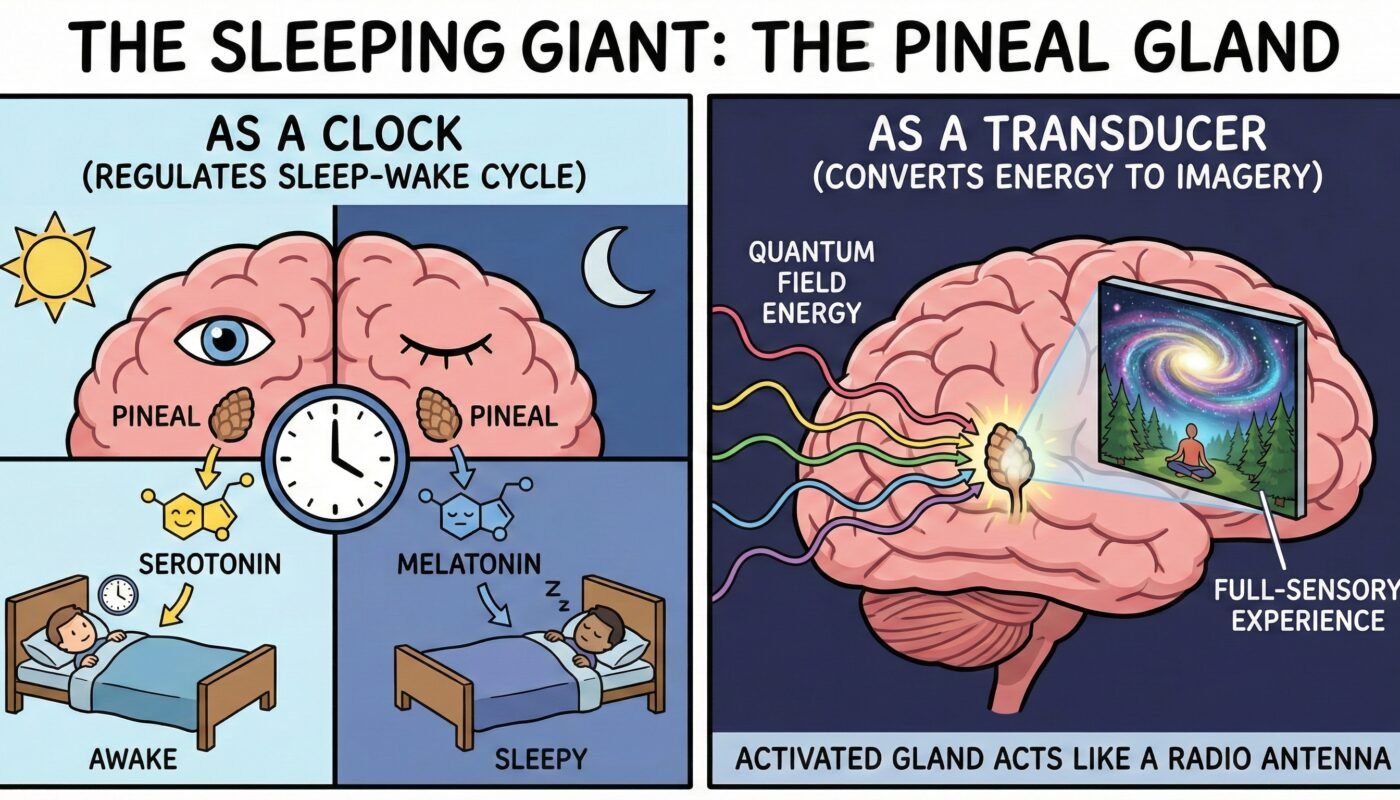
The pineal gland is a tiny, pinecone-shaped gland located deep in the center of your brain. For most people, it serves a simple biological function: it regulates your sleep-wake cycle (circadian rhythm) by producing melatonin.
- Daytime: When light hits your eyes, your pineal gland produces serotonin, which wakes you up.
- Nighttime: When it gets dark, your pineal gland converts serotonin into melatonin, which makes you sleepy. 1
But this is only its basic function. When activated through specific meditation techniques, the pineal gland stops being just a clock and becomes a transducer.
A transducer is like a radio antenna. It receives an invisible frequency (energy) and converts it into a meaningful signal (imagery). When your pineal gland is activated, it can tune into frequencies from the quantum field and translate them into full-sensory experiences in your mind.
The Science of Activation: How Crystals Create Energy
How do you turn a biological gland into a radio receiver? The answer lies in crystals.
Inside the pineal gland are tiny calcite crystals. These crystals have a unique property called the Piezoelectric Effect. This means that when you apply mechanical pressure to them, they generate an electrical charge. 2
This is where the breathing technique from Chapter 5 comes back into play.
- The Breath: When you contract your lower muscles and hold your breath, you push cerebrospinal fluid (CSF) up your spine and into your brain.
- The Squeeze: This fluid creates intense pressure inside the brain’s ventricles, physically squeezing the pineal gland.
- The Activation: This pressure compresses the crystals, generating an electromagnetic field. Your pineal gland literally lights up electrically.
Once activated, this electromagnetic field allows the gland to tune into higher frequencies, much like turning the dial on a radio to find a clear station.

The Alchemy of the Brain: Upgrading Melatonin
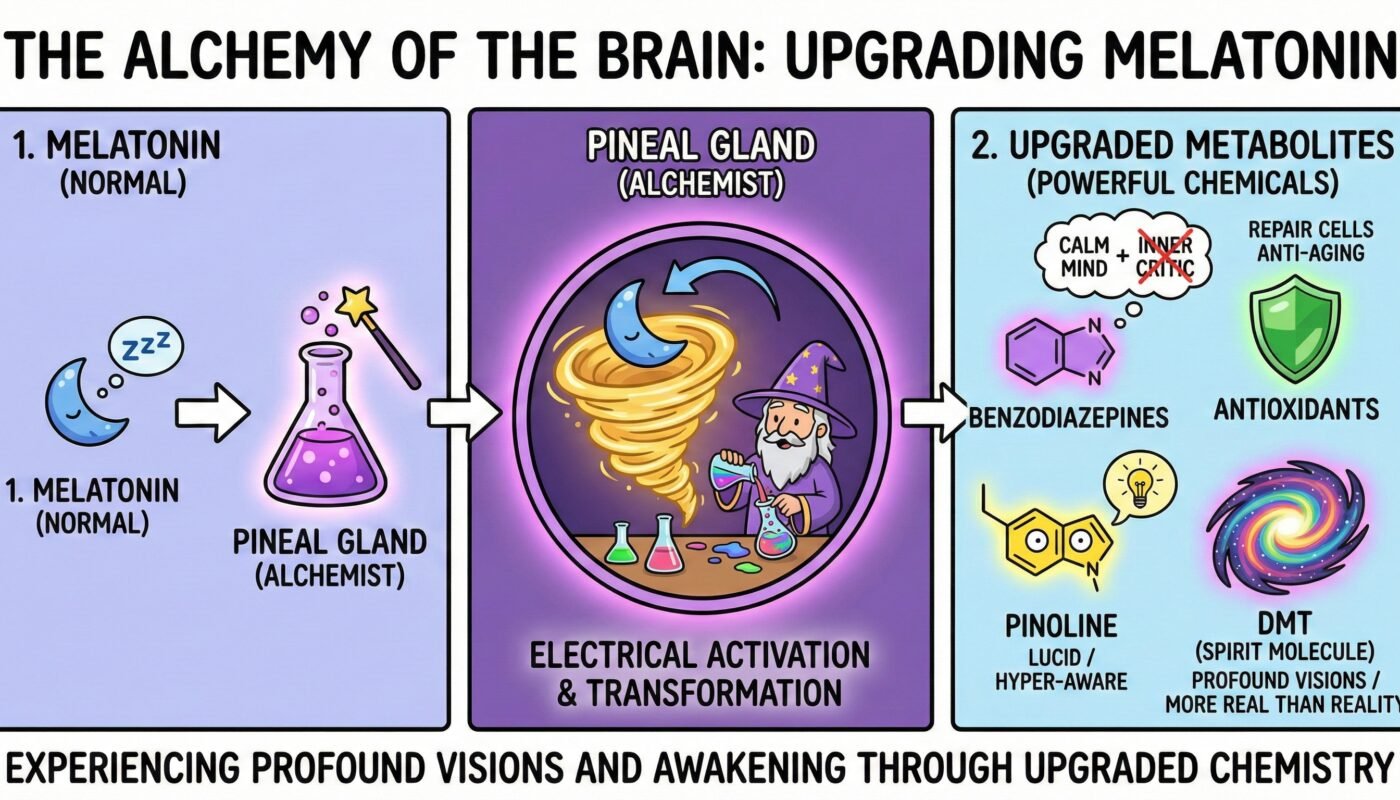
When the pineal gland is electrically activated, it doesn’t just produce normal melatonin. It becomes an alchemist. It takes the melatonin molecule and upgrades it into powerful metabolites3:
- Benzodiazepines: These suppress the analytical mind, silencing the “inner critic” and allowing you to surrender to the experience.
- Antioxidants: Powerful chemicals that repair cells and prevent aging (anti-aging). 4
- Pinoline: A chemical that makes you feel lucid and hyper-aware.
- DMT (Dimethyltryptamine): Often called the “spirit molecule,” this creates profound, visionary experiences that feel more real than this physical reality. 5
When these chemicals flood your brain during meditation, you don’t just “visualize” things. You experience them. You might see geometric patterns, profound light, or even other dimensions. You are no longer dreaming; you are awakening.
How to Activate Your Pineal Gland (Step-by-Step)
This meditation is designed to mechanically and energetically stimulate the pineal gland.
Step 1: The Breath
Start by performing the breathing technique (The Breath) to pull energy from your lower body up to your brain. Do this rhythmically to build up the pressure and charge. 6
Step 2: Focus on the Gland
Bring your awareness to the center of your head. Locate the pineal gland (imagine it as a tiny pinecone in the dark).
Where you place your attention is where you place your energy. By focusing here, you are directing blood flow and energy to this dormant center. 7
Step 3: Squeeze and Hold
On your inhale, hold your breath and squeeze your intrinsic muscles (perineum and abs), pushing that fluid up against the pineal gland. Imagine you are squeezing the crystals to ignite the spark.
Step 4: Tune In
Once you feel the activation (you might feel pressure in your head or see flashes of light), relax your breath but keep your focus. Open your awareness to the black space around your head.
Simply become a receiver. Don’t try to see anything; just wait for the information to find you.

Conclusion: Opening the Door to the Unknown
The pineal gland is your built-in technology for the supernatural. It is the bridge between the world of matter and the world of energy.
For thousands of years, ancient cultures depicted the pineal gland in art and architecture (like the pinecone staff of Osiris or the pinecone sculpture at the Vatican). They knew what we are just rediscovering: We are designed to see more than just the physical world.
By practicing this activation, you are waking up a dormant system. You are turning on the TV set in your mind that can tune into the frequency of a new reality.

Credit / References
Book Name: Becoming Supernatural: How Common People Are Doing the Uncommon
Author Name: Dr. Joe Dispenza
Note: The concepts regarding the pineal gland’s function as a neuroendocrine transducer, the piezoelectric effect of calcite crystals, the “upgrading” of melatonin into other metabolites, and the specific meditation techniques are derived from Chapter 12 of Dr. Joe Dispenza’s book.
Copyright Disclaimer
This article is written for educational and informational purposes only.
No copyright infringement is intended.
All original ideas and concepts belong to their respective author(s).
For any concerns or queries, please contact: contact@mohitsidana.com
FAQs
1. Is the pineal gland really a “third eye”?
Biologically, yes. The pineal gland actually contains photoreceptor cells, similar to the ones found in your physical eyes. It is wired to the visual cortex, which explains why activation often leads to seeing intense light or geometric visions internally. 8
2. Is it safe to put pressure on my brain like this?
The “pressure” created by the breath is internal intrathecal pressure. While it can feel intense, it is a natural mechanism. However, always listen to your body. If you feel dizzy or uncomfortable, relax the intensity and breathe normally.
3. What does “piezoelectric” mean?
Piezoelectric comes from the Greek words piezein (to squeeze) and piezo (to push). It refers to the ability of certain materials (like crystals) to generate an electric charge when mechanical stress or pressure is applied to them. 9
4. Why do I need to hold my breath?
Holding your breath while squeezing your muscles increases the internal pressure in your spinal column. This pressure is what pushes the cerebrospinal fluid up into the brain to physically compress the crystals in the pineal gland. 10
5. What will I see when it activates?
Experiences vary. Some people see fractals, geometric shapes, or intense white light. Others have profound emotional experiences or feelings of oneness. Some may simply feel a physical sensation of pressure or heat in the center of the head.
Post a comment
Related Posts
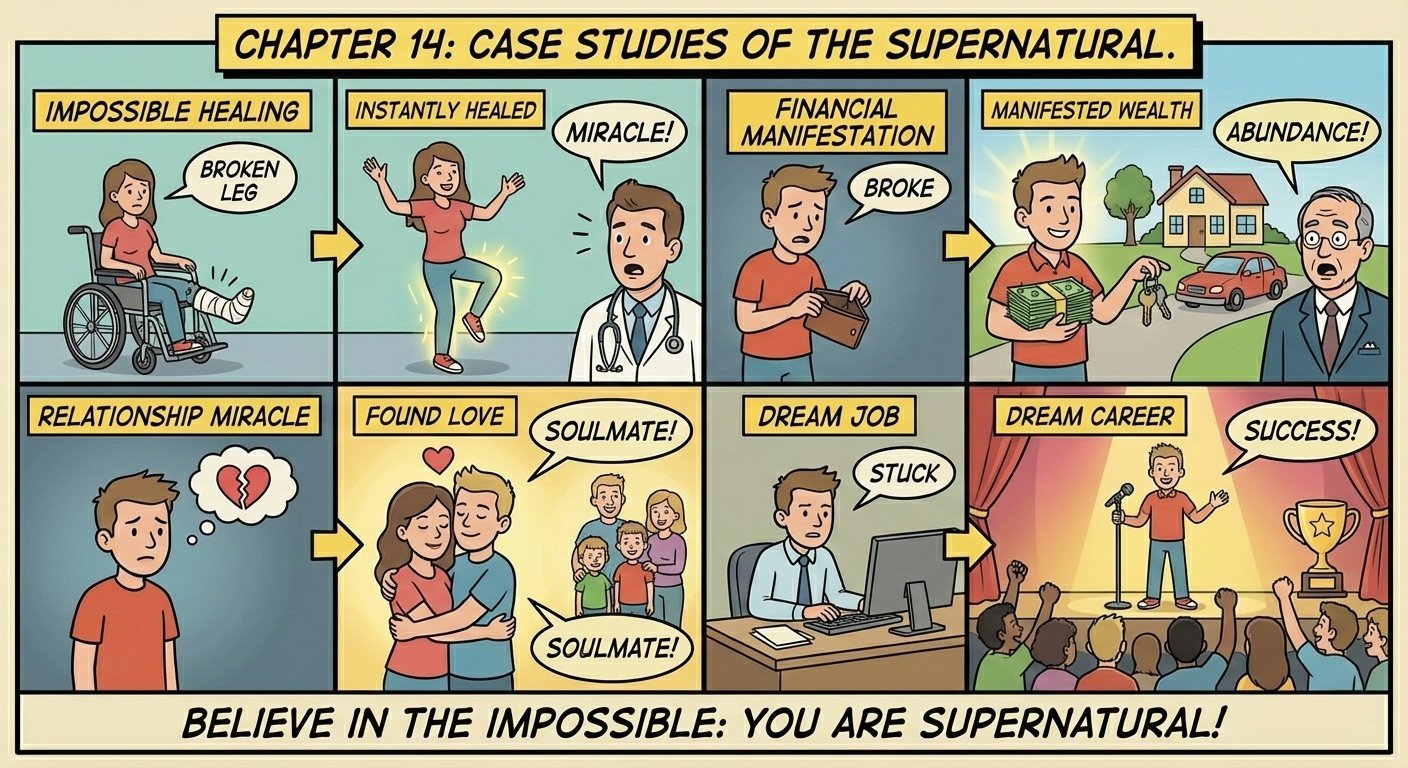
Case Studies of the Supernatural: 4 Impossible Stories of Healing and Manifestation – Chapter 14
We are told that some things are impossible. If you are diagnosed with a “terminal”…
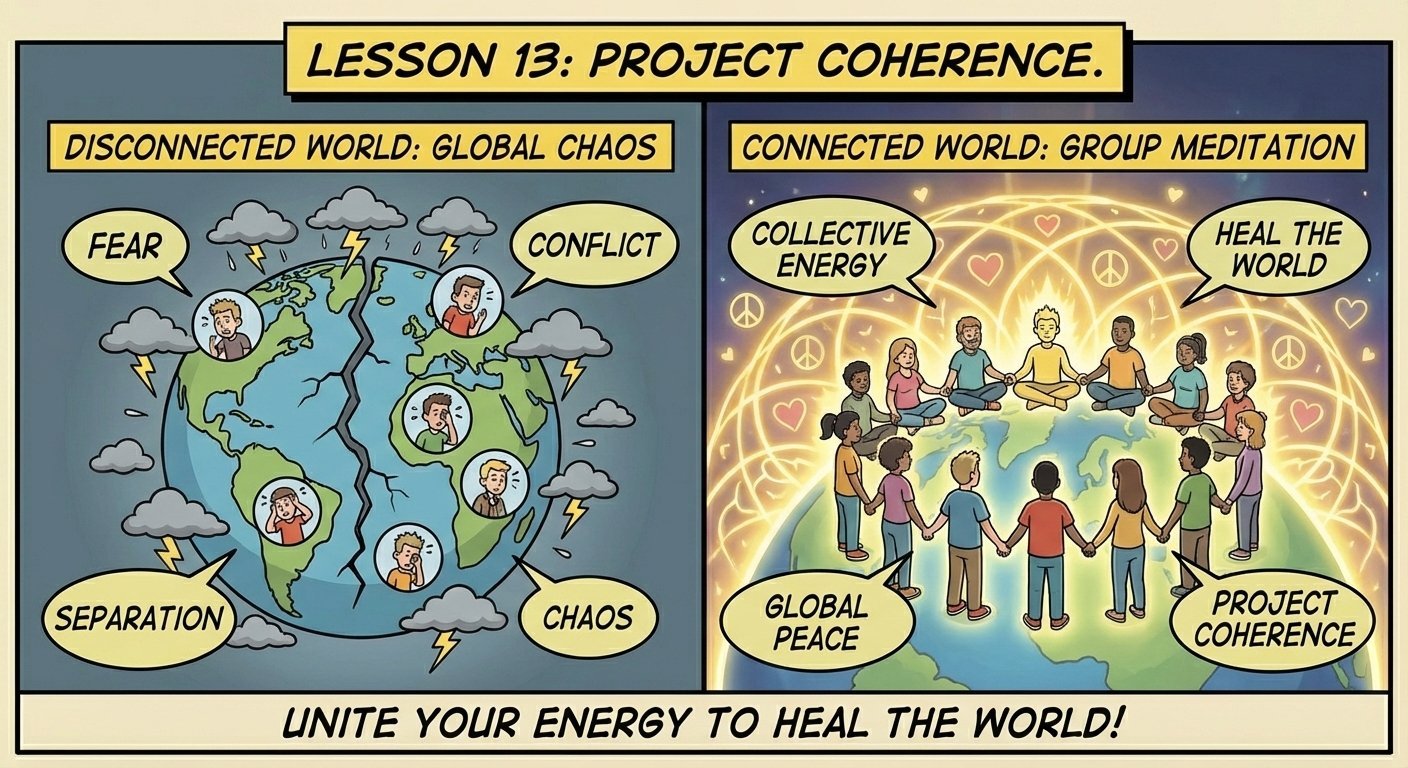
Project Coherence: How Group Meditation Can Heal the World – Lesson 13
We often feel helpless when we look at the world. We see war, poverty, crime,…
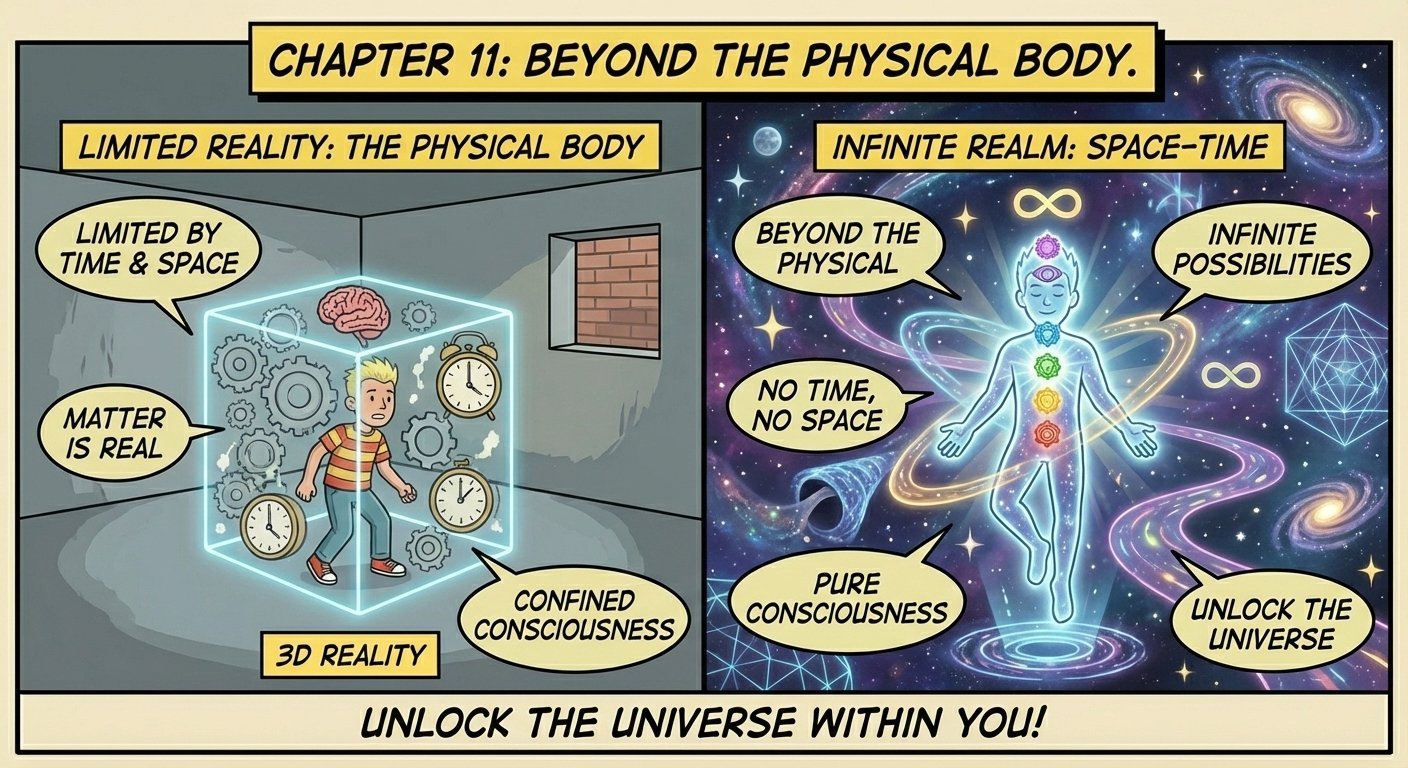
Beyond the Physical Body: How to Unlock the Infinite Realm of “Space-Time” – Chapter 11
We spend our entire lives perceiving the world through three dimensions. We see objects (height,…

The Future is Now: 3 Real-Life Stories of “Impossible” Manifestations – Lesson 10
We all have dreams. We all have things we want to change—whether it’s our bank…